
A busy Spoonbill
- Kelvin Wright
- Jan 27
- 1 min read

Updated: Jan 27
I'm quite familiar with the way Royal Spoonbills hunt. At the turn of the tide, when the water is about knee deep (for them), they eat small fish, crustaceans and invertebrates which they find by walking slowly along, their great flat bills immersed and swinging rhythmically from side to side. They seem to work on a kind of grid system, making a straight path through the water for about 50-60 metres before turning and following a parallel course back to where they started from. Their bills are complex sensory organs which they use to find their prey by detecting movement in the water and (perhaps) subtle electrical currents. Or so I thought.
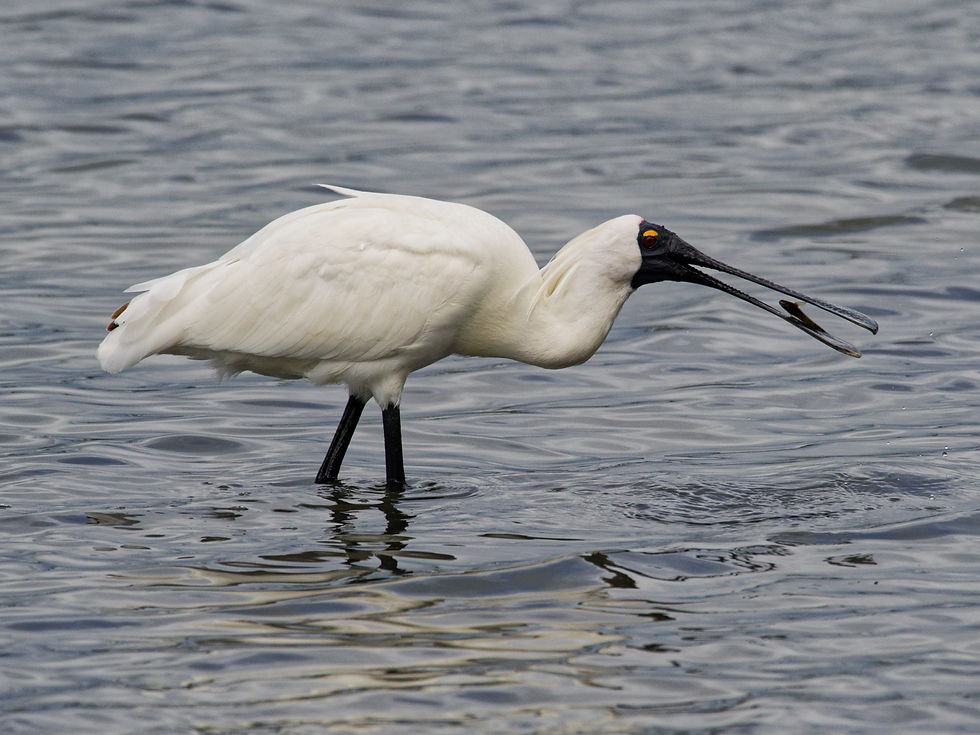
Today I saw a bird who wasn't following the script. It (I'm not good at sexing spoonbills, especially if they are on their own and I can't easily use size as a factor) was running haphazardly through the shallow water of the inlet pursuing fish. It's bill was in the water but it seemed to be using its eyes to chase down its speedy and agile targets


The energy expenditure was worthwhile. I saw it catch several fish, though the process of capture, tossing in the air to position the fish in an appropriate part of the bill, swallowing and continuing the hunt all took place in the space of about 3 seconds. The details were only apparent once I got the pictures onto my computer.
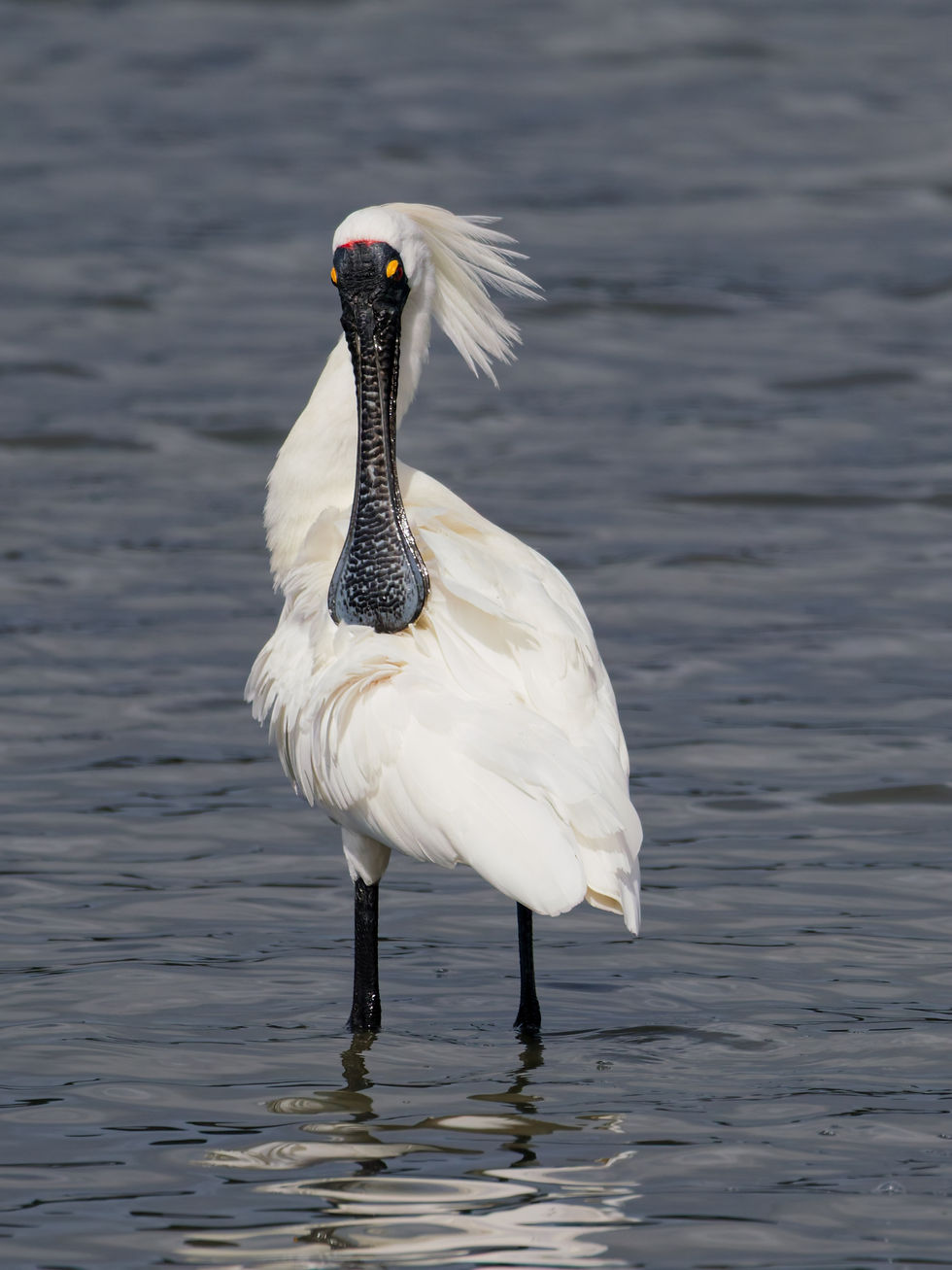
When enough protein had been added to the diet, the bird stood idly in the shallow water and tidied itself up a bit.




Comments